DRBU: Fifty Years of Contemplative Education
Celebrating DRBU's 50th Anniversary
Rooted in Chan Buddhism and the Great Books tradition, DRBU marks half a century of contemplative learning with commencement events and a look toward what’s next.
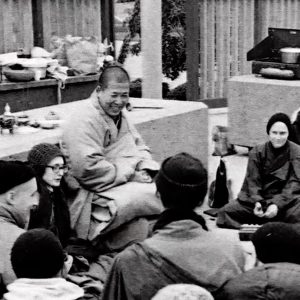
In 1968, Venerable Master Hsuan Hua, a Buddhist teacher who had recently arrived in the United States, led a 96-day intensive study and practice program for students and faculty visiting from the University of Washington in Seattle. It was meant to be a summer session, a few months of study and then goodbye. But something in those months changed the people who took part in it. When the session ended, many of them chose to stay in San Francisco and keep studying with him. By the close of that year, five of them had been ordained as monastics, the very first Buddhist Sangha to take root on American soil.
What followed was not a plan so much as a slow, patient unfolding. Small communities formed. Monasteries opened. People who had come as curious students stayed on as teachers, translators, and builders of something that didn’t yet have a name. Master Hua’s vision was never just about spreading a tradition. It was about building a place where that tradition could actually be lived, studied, and passed on, generation after generation, on soil far from where it began.
That vision found its fullest expression in 1976, when Dharma Realm Buddhist University was founded at the City of Ten Thousand Buddhas in Ukiah, California, alongside the Developing Virtue Secondary Schools that were part of the same undertaking. It was, in many ways, the natural next step for a community that had already spent nearly a decade proving that Buddhist practice and Western academic life didn’t have to exist in separate worlds. DRBU became a private, nonprofit institution connected to the Dharma Realm Buddhist Association and rooted in the Chan, or Chinese Zen, tradition, but its ambitions reached beyond any single lineage.
From its earliest days, DRBU set out to do something few universities have attempted. It built its curriculum around a version of the Great Books model, drawing not only from the towering works of Western philosophy but from the classic texts of Buddhist and Eastern thought as well, treating both as part of one shared human inquiry. The goal was never simply to fill students with information. It was to help them uncover a kind of wisdom the university believed was already theirs to find, through learning that is dialogical, questioning, and deeply reflective rather than passive. Today that same philosophy shapes bachelor’s and master’s programs across two campuses, one at the City of Ten Thousand Buddhas in Ukiah and another at the Institute for World Religions in Berkeley, and the university carries WSCUC accreditation.
Fifty years after that founding, DRBU is pausing to look back, and to say thank you, with a year of celebration in 2026. The festivities open on Saturday, May 23, with a morning gathering honoring Master Hua’s original educational vision, the same vision that once asked a group of visiting students to imagine a different way of learning. What began with a handful of students who weren’t ready to say goodbye has grown into a 700-acre campus where that same spirit of inquiry is still alive.
DRBU likes to frame this anniversary not only as a look back, but as a question turned toward the future: after fifty years, where are we heading? It’s a question the university seems genuinely eager to keep asking, together with whoever is willing to ask it with them.
For anyone drawn to that kind of education, one built on reflection, dialogue, and a genuine crossing of traditions, DRBU welcomes visitors to see the campus for themselves, explore its programs, and consider applying.