
Reflections from DRBU’s First Regenerative Agroforestry Workshop
From March 5–8, Dharma Realm Buddhist University (DRBU) hosted its first Regenerative Agroforestry Workshop, facilitated by experienced teachers from Hawaii, Dr. Craig Elevich and Jamyang Dolma. The four-day workshop brought a total of 28 students, staff, and community members, from children to older adults, together to learn the principles and practical steps involved in designing and planting a regenerative food forest.
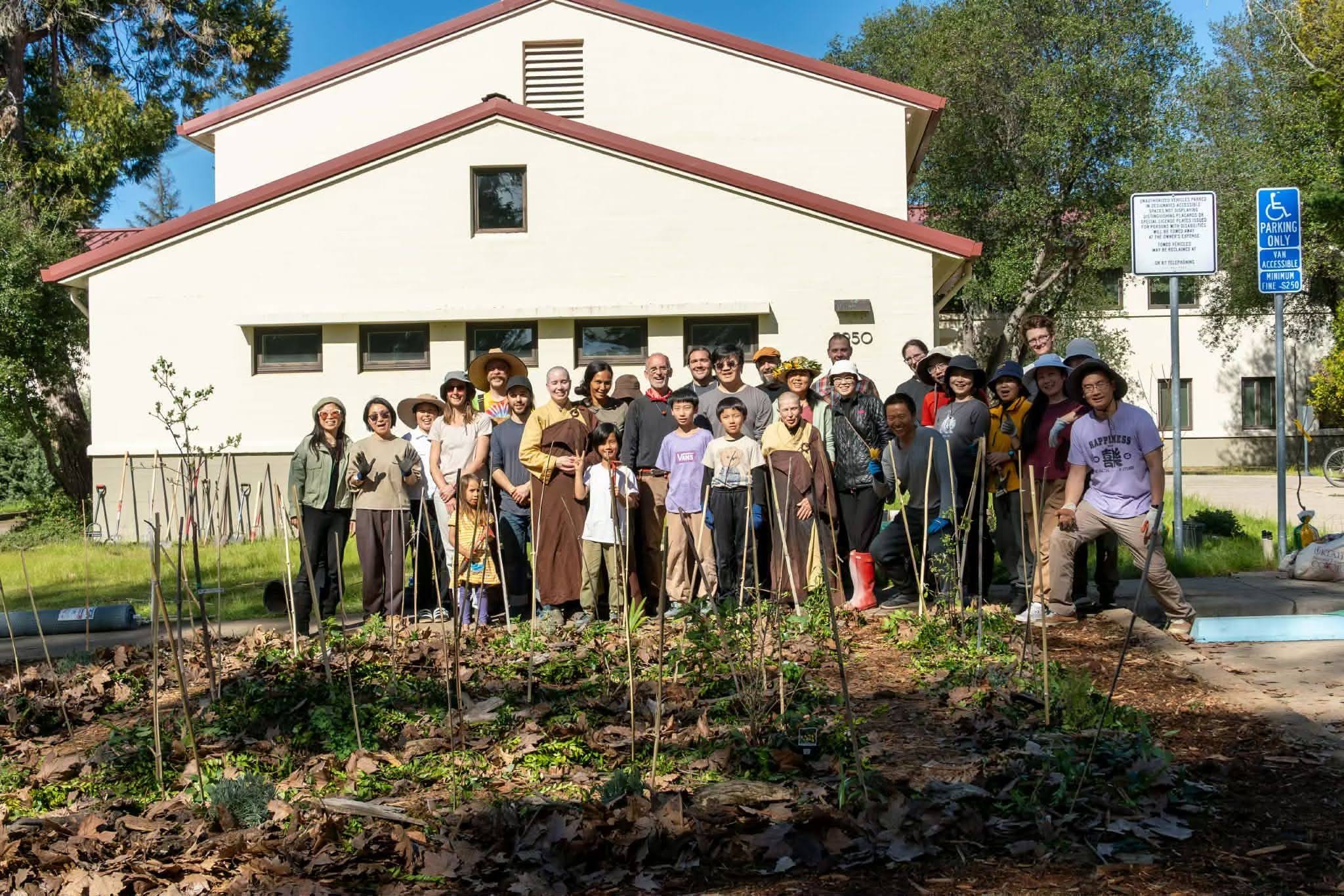
Workshop participants installed two food forests: one in front of the DRBU building, and another on the side of a residential cottage. Through a combination of classroom teaching and hands-on field work, participants explored how regenerative agroforestry can restore soil, increase biodiversity, create resilient food systems, and also regenerate the community and Self.
Beyond the practical skills learned, the workshop invited participants to reflect more deeply on humanity’s relationship with the land and with our own inner regenerative capacity. Regenerative agroforestry reveals the connection between healthy soils, diverse ecosystems, and our own sense of inner nourishment, well-being, and balance. By supporting nature’s regenerative and healing processes, we also set in motion processes of healing within ourselves.
I was involved in the planning phases of the workshop and joined the workshop with my four-year-old daughter, Kalyani. The first evening, we learned about the five principles of regenerative agroforestry:
- Multistory structure – Plants are planted to evolve in vertical layers, similar to a forest.
- High biodiversity – A wide variety of species creates resilience and synergy between species.
- Soil is always covered – Living plants and mulch protect the soil from sun and depletion, and nourish the soil with nutrients and root systems.
- Integration of shrubs and trees – Long-lived woody plants provide a long-lasting structure, both above and underground.
- Dense planting – Closely spaced plants mimic natural ecosystems and maximize abundance.
Although this knowledge was intuitive to me, I had not really been putting it into practice in my own garden—my soil was mostly uncovered in places where no plants were growing, and I was doing more monocropping than I realized by planting whole rows and sections of just one vegetable. In our culture, we see monocultures all around us, from vineyards to pear orchards. Somehow, those structures got embedded into my mind as “normal” or even healthy, even though, upon further reflection, I could clearly observe that these environments were not healthy. These systems degrade the soil and ecosystems and rely on external inputs such as chemical fertilizers and pesticides to remain productive.
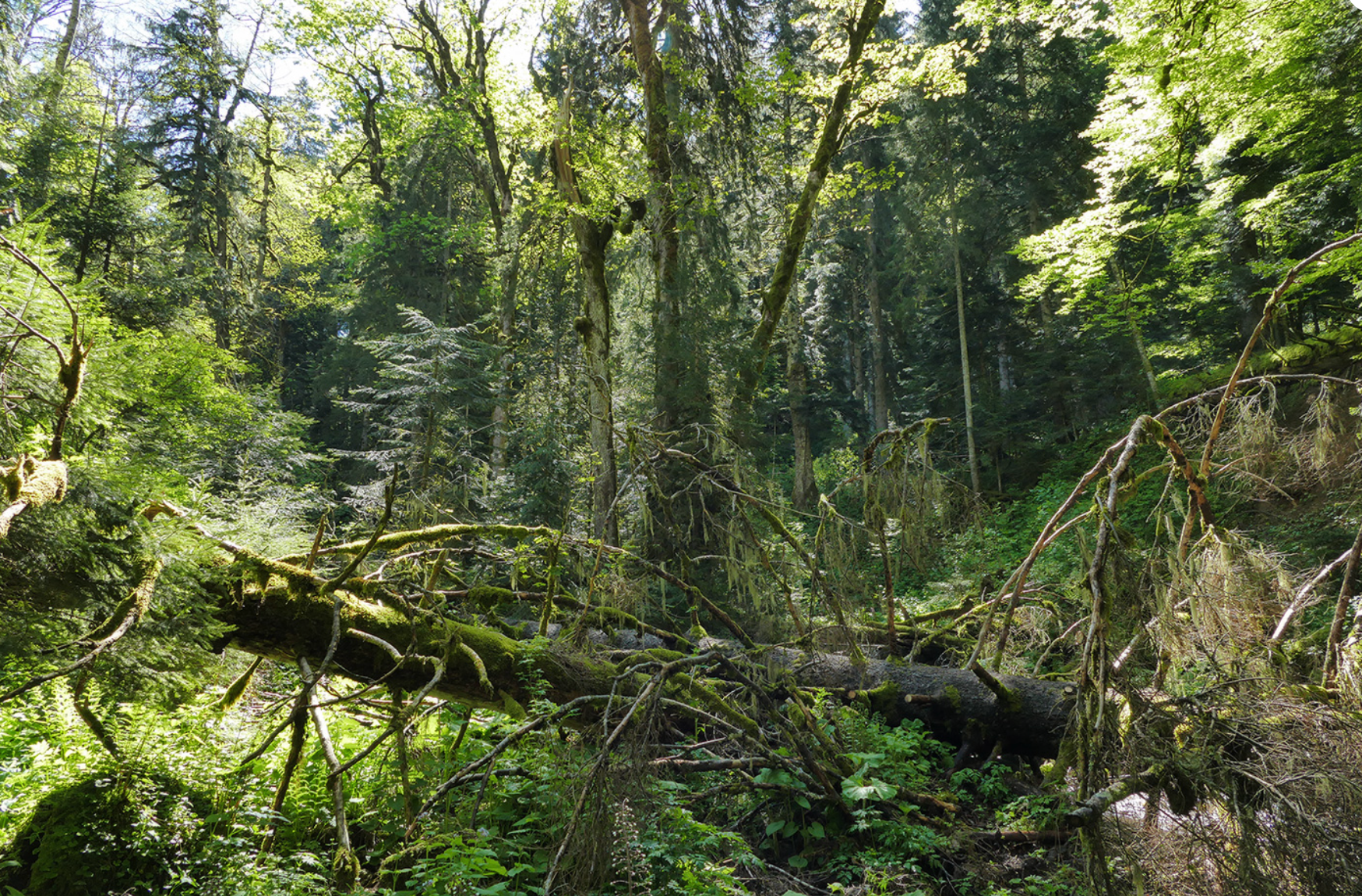
Dr. Craig showed us a photo of a healthy ancient forest and asked us to observe and reflect on what we noticed. The photo of a primeval forest in Bhutan showed all five principles in nature: a multistory canopy with trees and shrubs, high biodiversity, density, and covered soil with plenty of organic matter on the forest floor. Moisture and fog were present in the air, and one could sense the aliveness of the ecosystem.
Regenerative agroforestry systems produce a range of ecological benefits. Among the most important outcomes discussed during the workshop were:
- Carbon sequestration in plants and soil
- Resilience to drought, disease, and climate variability
- High biodiversity across plant, insect, microbial, and fungal communities
- Improved water infiltration and retention, allowing soil to capture and hold moisture
- Ongoing soil improvement through organic matter and living roots
 We were taught to observe the difference between healthy and unhealthy soils—soils that can hold nourishment and soils that cannot. Healthy soils are dark in color, moist, bound together by living roots, organic matter, and fungal communities, and have an earthy, sweet, fragrant smell. Depleted soils are not as dark, do not hold water well (or even repel water), lack the fragrant smell, and have a sandy, dry, grainy texture.
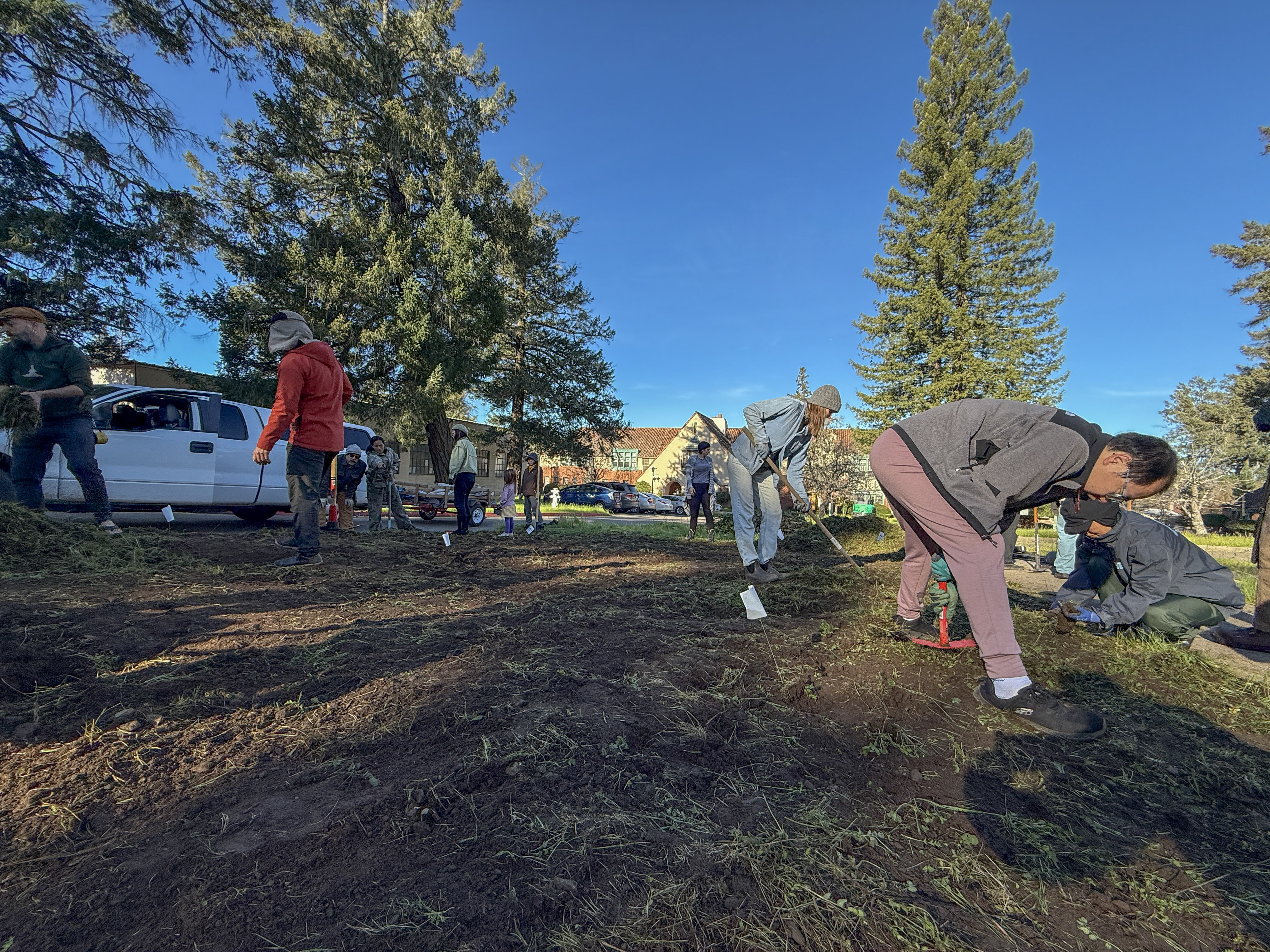
On Friday, we went to work on the DRBU plot. This plot was selected because of its high visibility and easy access to the community at DRBU. Dr. Craig emphasized that a food forest should be close to one’s home to make daily observation and care possible. Before work, participants blessed the land, each planting a “seed”—some planted a seed of wisdom, compassion, generosity, presence, or world peace. The work was carried out in deliberate steps:
- Mark the boundaries of the site.
- Gather green and brown mulch, woody material, and woodchips.
- Scalp (remove grass) the planting area.
- Aerate the soil with the digging bar.
- Mark pathways and spread woodchips along them.
- Plant long-term canopy trees.
- Add layered mulch (at least 6 inches): compost, green mulch, woody material, and compacted compost.
- Plant medium- and lower-height plants.
- Add additional mulch.
- Seed cover crop areas.
- Cover seeds with a thin layer of compost.
- Water thoroughly.
- Install fencing to protect the young plants.
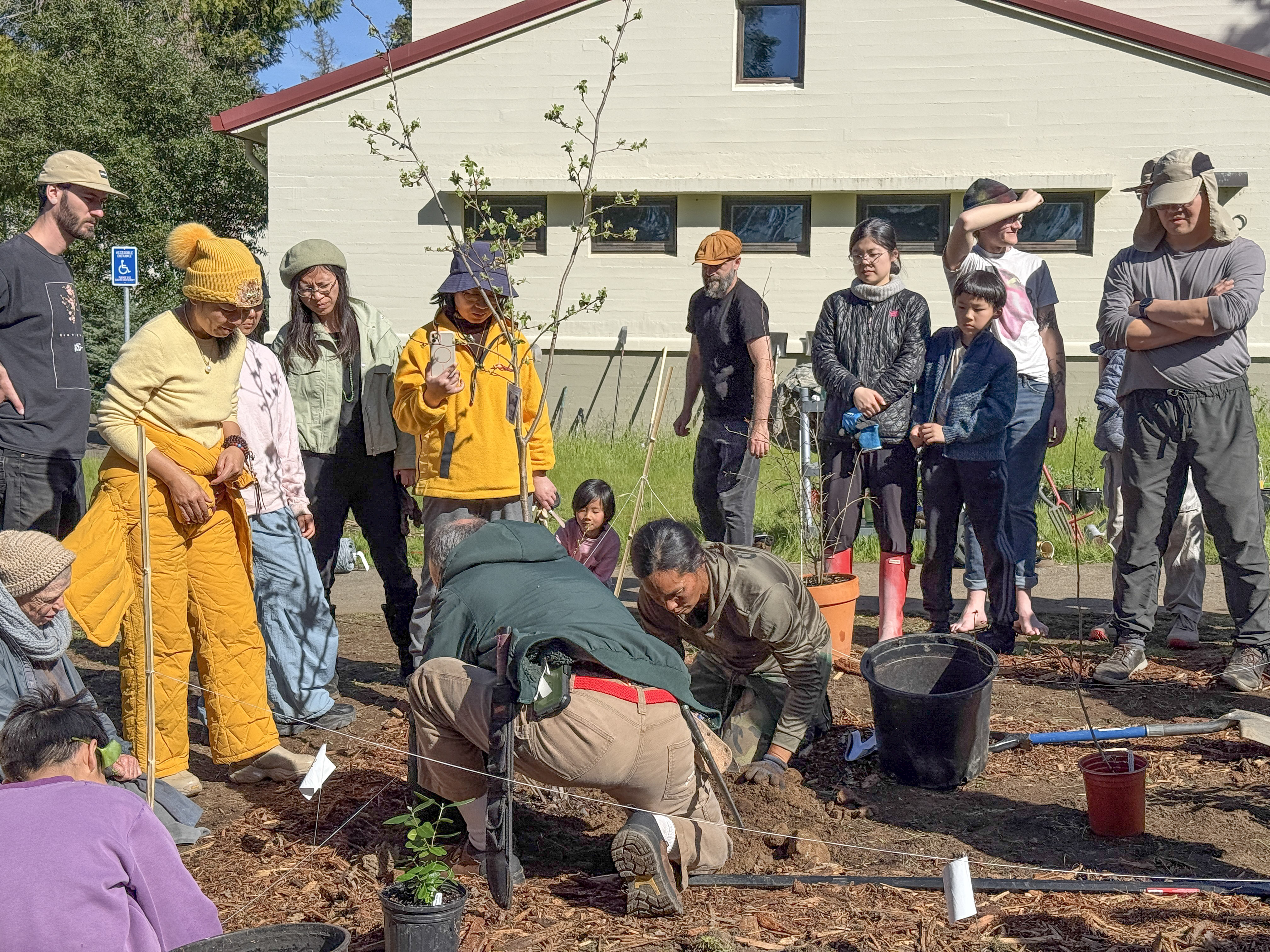
 The work to install a food forest requires strength, energy, and collaboration. Participants noted that the work felt deeply satisfying. I felt that the work resonated with a deep shared ancestral memory—working together outside for a common purpose. Many cultures work and sing together. On the first day, a rainbow cloud was observed over the land, which felt like a blessing. My four-year-old daughter quickly made friends with another child at the workshop and was enjoying herself thoroughly.
After the morning work, we shared a delicious lunch together in the DRBU courtyard, prepared by girls’ school teacher and chef Julia Mark. Everyone enjoyed the food prepared with love, intention, and organic ingredients. The food we eat, and how it is grown and prepared, plays a vital role in the inner regeneration of the human being. Jamyang Dolma shared with us the importance of self-care in the regenerative process—including eating according to the season and aligning with the daily and yearly clock, or 24 “solar terms,” as understood in Chinese medicine. Inner regeneration of the body and mind begins with nourishment.
 Over the course of the next couple of days, we planted an additional food forest next to Cottage 15 (the President’s cottage), as well as spent time learning in the classroom about aspects of regenerative agroforestry, including site assessment, species selection, planning, and creating maps of planting patterns, tools, native plants, maintenance, and inner regeneration.

Cultivating a Regenerative System
Planting a food forest is only the beginning. The 3–5 years after planting are crucial for the establishment of the plants and the development of healthy soil.
 Something that struck me the most is the importance of observation and the relationship of the observer with the observed. As a practitioner of yoga and Ayurveda, I am aware that direct perception is our primary method of attaining true knowledge and discernment. What is interesting about this, in the context of living beings, is the mutuality of direct perception: we observe the plants, the plants observe and respond to our observation, and we observe ourselves. This observation brings knowledge about the environment and knowledge about ourselves—knowledge about what our next step should be, knowledge of whether something is off and how to correct it. In mindfulness, Buddhism, yoga, and other contemplative practices, observation can become increasingly refined to produce insight, growth, healing, and wisdom. This is the inner regeneration of the senses, mind, and Self.
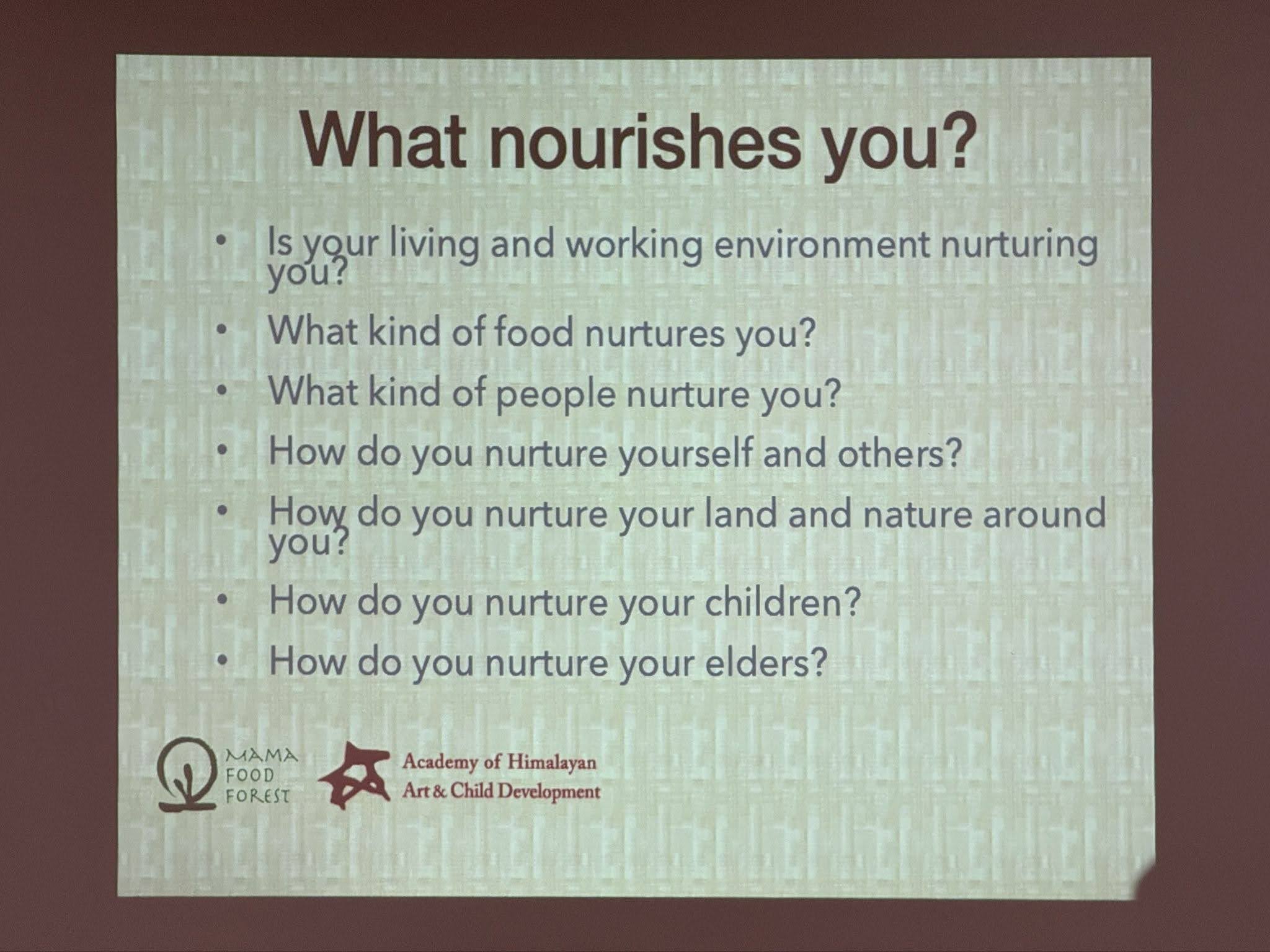
 At Dharma Realm Buddhist University, this first workshop marks an important step toward cultivating our land in a way that nourishes the earth, the community, and the Self. Globally, as we witness countries, communities, and families being affected by war, environmental degradation, water and food insecurity, and climate change, regenerative agroforestry offers a practical and hopeful path toward restoring our precious Earth and healing ourselves. At DRBU, we plan to continue to evolve this work, care for our food forests, and design future programs. We invite you to take this work into your life by reflection on these questions offered by the facilitators, Dr. Craig and Dolma.
Gratitude to our teachers, Dr. Craig and Dolma, and all of the workshop participants.