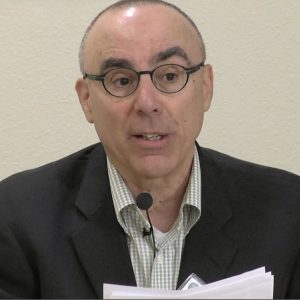
Colloquium: What We Can Learn from Buddhist Debates over the Nature of Time
Ukiah, CA 95482
Talk by Robert H. Sharf
This talk will take as its focus the signature Sarvāstivāda-Vaibhāṣika doctrine that past, present, and future things all exist. The Sarvāstivāda theory of time anticipates, in many respects, “block-time” models of the universe that are popular among theoretical physicists today. In these models, time is a dimension spread out like space, and everything that ever was or will be has a fixed position within the block. The proposal in this talk is that the similarities between the early Buddhist theories and contemporary ones are neither coincidental nor insignificant: in both cases they are attempts to respond to puzzles concerning the nature of change, causation, and the “flow” and “direction” of time.
About the Speaker
 Robert Sharf is D. H. Chen Distinguished Professor of Buddhist Studies in the Department of East Asian Languages and Cultures at the University of California, Berkeley, as well as Chair of Berkeley’s Numata Center for Buddhist Studies. He works primarily on medieval Chinese Buddhism but has also published in the areas of Japanese Buddhism, Buddhist art and archaeology, Buddhist modernism, Buddhist philosophy, and methodological issues in the study of religion.