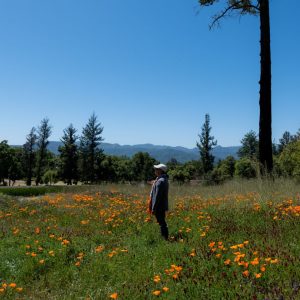
BA student Bach Nguyen reflects on the existential angst that has plagued young people across time. He interviews Professor Doug Powers on how a Buddhist approach might offer help.
Bach: In our late teenage years, we often question what we should do for the rest of our lives. This is when a seventeen-year-old kid is forced to think about their career and what they want to pursue for the next forty years of life, at least tentatively, because the major they signed up for in their undergraduate application drastically shapes their life direction. Facing the first existential crisis of our lives, we often ask, “How do I know what to do with my life?”
What advice do you have for young people with this question, Doug?
Doug: Well, you don’t know! At least right now, you don’t know what to do with your life.
But the only way that you’ll eventually know what to do with your life is to get as comfortable with yourself, by yourself, as possible. Because then you will have the greatest amount of freedom.
Any place that you have neediness or you know that you need something, you don’t have freedom. Because the neediness is actually making you go after something. So you’re basically just a mechanical process insofar as you’re being controlled by your neediness. If you want freedom to choose a life for yourself, then you have to create space for your mind to be free. And the only way you can do that is to be as comfortable as you can with yourself and by yourself.
Then, from that place, see within the possibilities of your current situation to choose the best approach for your situation.
Bach: So after developing this space of freedom within ourselves, we examine our current situation and choose the approach that will align with our values and that does not further deplete the space of freedom but maintain and increase it. When you say “be comfortable and be completely fine with yourself,” what do you mean?
Doug: Right now, any time that you’re out on any kind of screen or social media or anything where the senses are being overwhelmed by distraction, you don’t have a place where you’re actually free in your own mind. You are constantly moving, with and by distraction. When you’re in that distraction, you don’t have freedom, because in that distraction they have all these algorithms that are dragging you around that know you better than you know yourself.
You have to have time with yourself and learn to enjoy and relax with yourself.
Exercising or physical activity is a really good option. You’re kind of just with yourself when you’re running. Of course something like meditation is great too, like focusing on your breathing or taking a walk in the forest—anything that helps you relax and be in your own thoughts. Then, in that place of your own thoughts, you have a certain amount of freedom that you can begin to see and observe without being taken up by all the distractions and all the neediness that you have. So that’s the way you can begin to create any kind of freedom of choice.


