Career Pathways
An education at DRBU prepares graduates for a wide variety of possible careers. Because a broad-based liberal arts degree teaches “how to think” more than “what to think,” students are poised to flourish in any of several different directions. Here you can explore some potential directions for a career after DRBU.
Healthcare
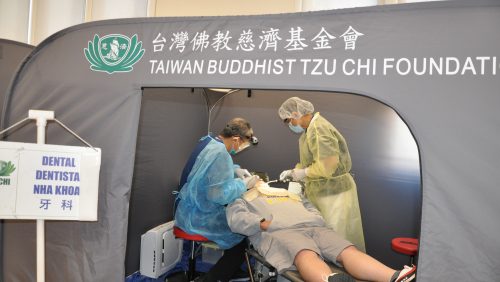
DRBU helps prepare students for careers in public health, Chinese medicine, or medical practice by having students engage in critical thinking and deep inquiry of the natural processes that govern our lives. Relevant texts covered in the DRBU curriculum include Aristotle’s On the Parts of Animals, Darwin’s On the Origin of Species, Lamarck’s Zoological Philosophy, Linnaeus’s Systema Naturae, and Sun’s On the Sublime Sincerity of the Eminent Physician.
Law and Public Policy
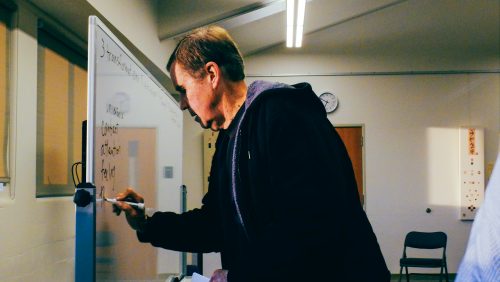
The curriculum at DRBU makes for an excellent preparation for legal and political careers including becoming a lawyer, elected official, policy analyst, or legal scholar. Students at DRBU will study works such as Plato’s Republic and Phaedrus, Aristotle’s Nicomachean Ethics, and Nietzsche’s On Truth and Lies in a Nonmoral Sense.

Writing
Writing is a natural career choice for DRBU alumni. Graduates may pursue careers in fields such as journalism, marketing, public relations, content creation, or creative writing. The classics covered in DRBU’s Great Books curriculum are designed to expose students to a wide variety of the best writing throughout history and build students’ writing skills. Texts include core Pāli suttas such as the “Metta Sutta” and the “Kalama Sutta,” the Bhagavad Gītā, Hamlet, and Don Quixote.
Chaplaincy and Spiritual Care
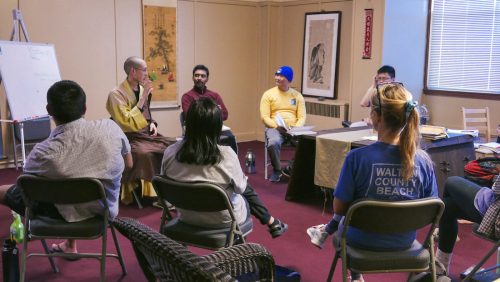
The study of chaplaincy and spiritual care at DRBU provides a distinctive foundation for careers as hospital chaplains, military chaplains, hospice counselors, prison chaplains, and corporate wellness advisors. Students engage with compassion and suffering alongside the contemplative practice of mindfulness in texts such as the Therīgāthā, the Śūraṅgama Sūtra, Marcus Aurelius’s Meditations, and Lao Zi’s Dao De Jing.
Education
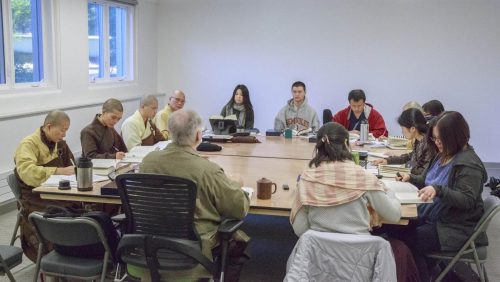
DRBU students are well-poised to pursue such careers in education as classroom teachers, curriculum designers, school administrators, educational researchers, and professors. By engaging deeply with a broad base of primary texts across traditions and practicing discussion-based inquiry, students develop the clarity of thought, patience, and ethical grounding essential for nurturing the next generation of learners. The DRBU curriculum explores the importance of education and practical methods for its application in such texts as the Analects of Confucius, Plato’s Republic, Aristotle’s Nicomachean Ethics, the Lotus Sūtra, and the Avataṃsaka Sūtra.